Before buying product, comparing sprayers, or planning an application day, the first question is whether the roof is a good DIY project. That is different from asking whether roof rejuvenation might help. A roof may be reasonable for professional treatment and still be a bad project for the homeowner.
The roof has to qualify, but so does the situation. Slope, height, access, weather, loose granules, roof complexity, and the homeowner’s comfort around ladders all matter. A simple, single-story asphalt shingle roof is a very different project from a steep two-story roof with valleys, dormers, landscaping, and awkward access. The product does not make the roof easier to stand on.
Start With Roof Type
APEX 1132 is designed for asphalt shingles. That is the first filter. If the roof is metal, tile, slate, wood shake, or a flat membrane system, this is not the right application.
If you’re not sure what kind of roof you have, stop and confirm before buying anything. Most homeowners can identify asphalt shingles from the ground, but some materials can be confusing from a distance. The wrong roof type is an easy reason to stop early.
Aging Is Different From Failing
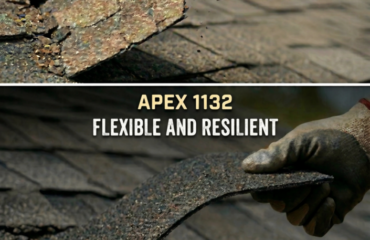
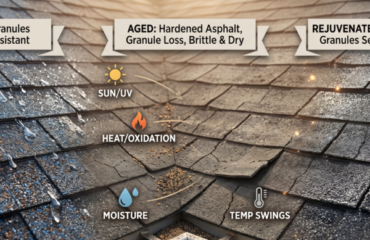
A roof worth evaluating for rejuvenation may look faded, dry, or weathered. You may see some granules near downspouts. The roof may be older and less sharp-looking than it used to be. Those are maintenance clues, not automatic proof that the roof is done.
A failing roof is different. Active leaks, ceiling stains, missing shingles, rotten decking, sagging areas, widespread cracking, exposed mat, severe curling, bad flashing, or major storm damage all point toward repair or replacement before treatment. Some problems may be repair-first issues. Others may mean the roof is past the maintenance window.
DIY makes this line even more important. A contractor may catch and document repair-first issues that a homeowner could miss. If you’re unsure whether the roof is aging or failing, get an inspection before treating. Guessing wrong can waste money and delay the work the roof actually needs.
Look From The Ground First
Start with what you can see safely. Walk around the house and look for missing shingles, lifted edges, bare-looking patches, sagging lines, debris in valleys, moss, heavy staining, or areas that look much worse than the rest of the roof. Check near downspouts for granule buildup. Notice tree cover, shade, and sections that may stay damp.
Then look inside. Check ceilings for stains, attic areas for moisture, musty smells, damp insulation, or daylight coming through roof boards. If you see water clues, the roof needs diagnosis. Rejuvenation is not leak repair.
This first-pass check doesn’t need to be dramatic. You’re trying to decide whether the project is worth investigating further, not proving you can inspect like a roofing contractor.
Decide Whether You Can Work Safely
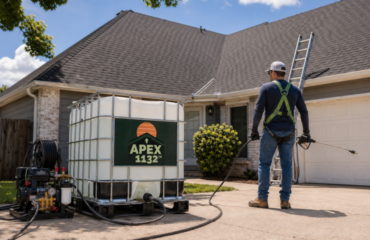
This is the DIY question that matters most: can you safely access and work around the roof long enough to apply an even treatment? If the answer is not a confident yes, don’t do it yourself.
Be cautious with steep slopes, two-story homes, wet shingles, loose granules, ice, moss, fragile shingles, poor ladder setup, awkward roof sections, and windy conditions. If you feel nervous just looking at the access, that is useful information. A low-slope porch roof or simple ranch-style roof may be manageable for a careful homeowner. A steep main roof with valleys and limited access may not be.
There is no shame in hiring the work out. The goal is roof maintenance, not proving a point.
Weather And Timing Matter
The roof should be dry before treatment. Rain, heavy dew, frost, cold conditions, and high wind can make application less predictable and less safe. If the forecast is questionable, wait. A rushed DIY job is usually where problems begin.
Plan enough time to inspect, prep, mix, spray, manage overspray, clean up, and document the work. If you’re trying to squeeze the project between lunch and a thunderstorm, the project already has a problem.
When To Stop
Stop if you find active leaks, missing shingles, soft decking, structural concerns, major storm damage, unsafe access, or anything you don’t understand. Stop if the roof is wet. Stop if the wind makes overspray hard to control. Stop if you’re uncomfortable.
Stopping is not failure. It is good judgment. Sometimes the best DIY decision is deciding the job is not a DIY job.
The Practical Takeaway
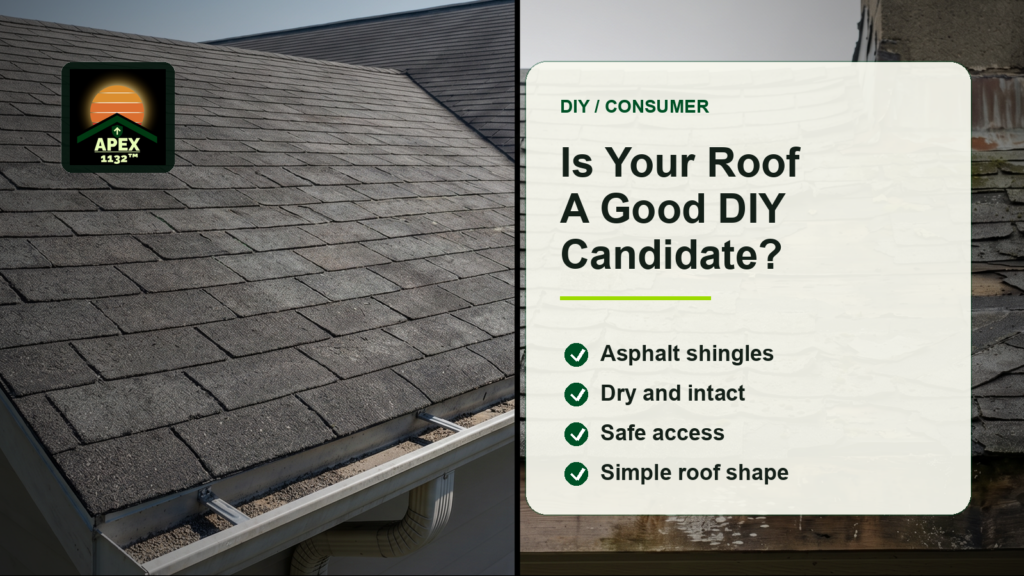
A good DIY project is an asphalt shingle roof that is intact, dry, safely accessible, and simple enough for the homeowner to treat evenly. A bad DIY project is steep, high, wet, damaged, leaking, structurally questionable, or confusing.
The product can be a strong value, but the roof gets the final vote. If the roof does not qualify or cannot be accessed safely, don’t force the math. Hire someone qualified or solve the roof problem first.