Roof rejuvenation is a good service to sell when it is kept in the right lane. It gets messy when it is presented like a magic trick. Homeowners are already cautious about roof decisions because roofs are expensive, hard to inspect from the ground, and easy to worry about. If the pitch sounds too big, too fast, or too certain, they may distrust the service even when the roof is a reasonable fit.
Sell rejuvenation as maintenance. Not miracle repair. Not replacement in a bottle. Not “you will never need a new roof.” Maintenance. People already understand that word. Cars need maintenance. HVAC systems need maintenance. Decks, driveways, gutters, windows, and siding all age outside and need attention. Asphalt shingle roofs are not exempt.
Start With The Roof
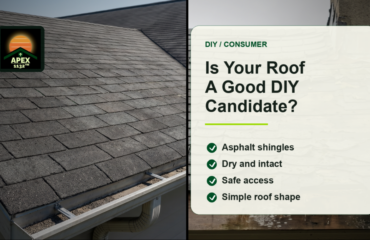
The sales conversation should begin with roof condition. If the first thing a customer hears is a big product claim, the roof can feel like a prop in a sales routine. If the first thing they hear is what you are looking for and why, the conversation changes. You are evaluating the roof, not forcing every roof into the same answer.
A homeowner can understand, “This roof looks worn, but I don’t see signs that it has failed,” much more easily than they can process a technical speech about asphalt chemistry. The product matters, but the decision starts with what is actually on the house. Is it asphalt shingle? Are there active leaks? Are shingles missing? Is there exposed mat, bad curling, sagging, rotten decking, or storm damage?
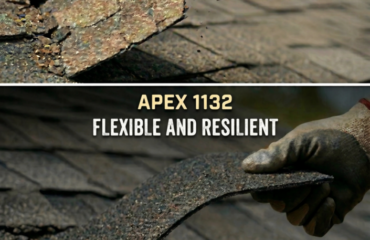
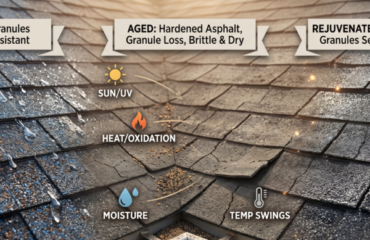
When the roof passes that first screen, the product conversation becomes easier. You can explain that APEX 1132 is designed for asphalt shingle maintenance and is used to help support flexibility, grit retention, and surface condition. That is enough for most homeowners. If they want the deeper science, give them the deeper science. On the sales call, keep the main point clear.
Sell The Middle Option
Many homeowners think roof decisions are binary. Either ignore the roof and hope nothing happens, or replace it and write a large check. Roof rejuvenation gives you a middle option, and that is where the value lives. The customer does not need to be scared into action. They need to understand timing.
A strong explanation might sound like this: “Your roof is not new, but I am not seeing a failed roof either. This is the stage where maintenance may make sense. If we wait until it is leaking or badly damaged, then we are probably talking repair or replacement. Right now, there may still be roof life worth protecting.”
Be careful with replacement comparisons. It is fair to say replacement is expensive, and it is fair to say maintenance may help delay a premature tear-off. It is not fair to make rejuvenation and replacement sound like they solve the same problem. Replacement rebuilds the roof covering. Rejuvenation maintains shingles that still have life left. Those are different services.
Use Confidence Without Hype
There is a difference between being careful and sounding weak. APEX 1132 was built for asphalt shingles. It has a defined use case. It has mixing and coverage guidance. It is intended to help treated shingles perform better than if they were simply left alone. That is a strong story.
Keep the verbs honest. “Helps improve” is usually better than “guarantees.” “Designed to support” is better than “will prevent.” “May help delay replacement” is better than “avoid replacement.” Some salespeople hate softer verbs because they think certainty closes deals. In this category, sloppy certainty can do the opposite. It makes the pitch sound like the kind of home-improvement promise people have learned to distrust.
You can still talk about economics clearly. If a homeowner is staring at the possibility of a $20,000 replacement, then a maintenance service that may buy useful time has real value. Say that plainly. The homeowner is not foolish for wanting to avoid a large replacement bill, and you are not being sneaky by offering a lower-cost maintenance path when the roof supports that recommendation.
Make The Limits Part Of The Pitch
Limitations are not a weakness here. They are part of the credibility. Roof rejuvenation does not fix active leaks, rotten decking, missing shingles, failed flashing, structural problems, or major storm damage. If those issues exist, they need to be handled before treatment is considered.
This can feel strange if you are used to sales conversations where every limitation sounds like a reason not to buy. In roof rejuvenation, the limits help the customer believe the recommendation. When you say, “If I see a roof that needs replacement, I am going to tell you that,” the customer hears a person making a judgment instead of chasing a sale.
It also protects the business. A customer who thinks rejuvenation is a leak repair will be unhappy when a flashing issue leaks six months later. A customer who understands it as shingle maintenance is much more likely to judge the service correctly.
Keep The Conversation Human
Homeowners do not need to feel like they are being cross-examined. They need a clear explanation, useful photos, and enough context to make a decision. Plain language goes a long way. “This roof looks tired, not wrecked” is often more helpful than a long technical explanation.
The best sales conversations are not always the longest ones. Show the roof condition. Explain why the service does or does not fit. Explain what the treatment is intended to do. Explain what it will not do. Give the customer the price and the replacement context. Then let the recommendation stand on its own.
The Practical Takeaway
Selling roof rejuvenation well means selling it smaller and stronger. Smaller, because the promise stays in the maintenance lane. Stronger, because that lane is real, valuable, and easier to defend.
The goal is not to win one job with a giant promise. The goal is to build a service customers believe, refer, and come back to when the next maintenance window arrives.